Last updated October 2, 2026. Prices are US list prices per month, before tax.
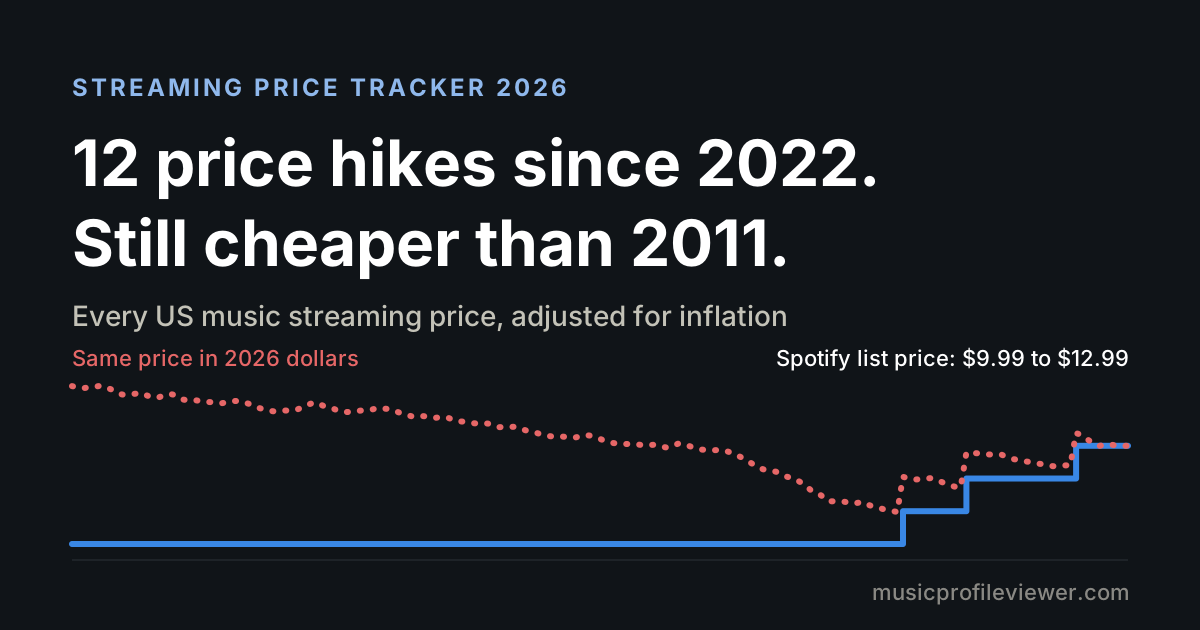
In the US, Spotify Premium now costs $12.99 a month. Apple Music, YouTube Music and Tidal cost $11.99 each, and Amazon Music Unlimited costs $12.99, or $11.99 if you have Prime. Getting there took 12 increases to the headline individual price since October 2022. Before that, none of these five services had raised its headline individual price since launch. Adjust for inflation, though, and every one of those plans is cheaper today than the day it launched. Spotify's original $9.99 from 2011 works out to $14.81 in today's money. The people genuinely paying more than they used to are on Duo, Family and Prime-member plans.
What every music streaming service costs right now (October 2026)
Here are the current US prices for every main plan, checked against each company's own price page where one exists. The cheapest option in each column is in bold.
| Service | Individual | Duo | Family (up to 6) | Student | Last increase |
|---|---|---|---|---|---|
| Spotify Premium | $12.99 | $18.99 | $21.99 | $6.99 | January 2026 |
| Apple Music | $11.99 | None | $19.99 | $6.99 | July 2026 |
| YouTube Music Premium | $11.99 | None | $18.99 | $5.99 | April 2026 |
| Amazon Music Unlimited | $12.99 ($11.99 with Prime) | None | $19.99 (see note) | $5.99 | February 2026 |
| Tidal | $11.99 | None | $19.99 | $6.99 | August 2026 |
Sources: Spotify's US Premium page, Apple's Apple Music page, NerdWallet's YouTube Premium price guide (for the YouTube Music student price), TechCrunch on YouTube's April 2026 increase, DealNews' Amazon Music price breakdown, Music Business Worldwide on Amazon's February 2026 rise and Tidal's subscription types page.
A note on Amazon's family plan: Music Business Worldwide reported a February 2026 rise to $21.99 a month, but RouteNote reported only the annual plan going up, and DealNews' October 2026 price guide still lists $19.99 a month. Check Amazon's sign-up page before you compare.
For a single person who doesn't have Prime, the cheapest choice is Apple Music, YouTube Music or Tidal, all at $11.99. Family plans differ more. YouTube Music's $18.99 family plan costs $3 less than Spotify's $21.99, which adds up to $36 a year. Spotify is now the most expensive of the five, or tied for most expensive, on every plan it sells. It's also the only one with a Duo plan.
Two more prices to know about. Pandora Premium rose to $11.99 for new subscribers on September 22, 2026, with existing subscribers moving on October 22. YouTube Premium, which includes YouTube Music plus ad-free video, went to $15.99 in April. If you already watch YouTube every day, that $4 gap is the real comparison to make.
Interactive price tracker and cost calculator
Switch the chart between list prices and inflation-adjusted prices, then work out what your own subscription has cost since the month you joined.
Every US music streaming price since 2011
Individual plans. Hover or tap the chart to compare services in any month.
What has your subscription cost you?
Pick your service, plan and the month you started paying.
Uses the month each price applied to new subscribers; existing subscribers usually moved one or two billing cycles later, so treat totals as close estimates. Excludes tax, free trials and promotions. Inflation: BLS CPI-U via FRED (October 2025 interpolated; BLS did not publish it). Data and sources: musicprofileviewer.com.
Every US music streaming price change since 2011
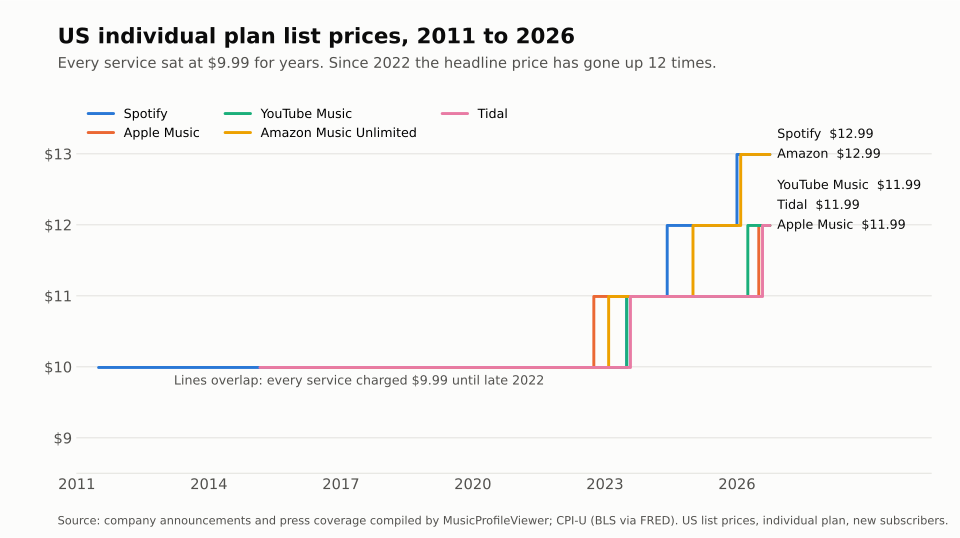
The dates below are when each price applied to new subscribers. If you already subscribed, the change usually reached you one or two billing cycles later.
Spotify
| Date | Individual | Duo | Family | Student |
|---|---|---|---|---|
| July 2011 (US launch) | $9.99 | |||
| March 2014 | $9.99 | $4.99 | ||
| May 2016 (Family opens to 6 people) | $9.99 | $14.99 | $4.99 | |
| July 2020 | $9.99 | $12.99 | $14.99 | $4.99 |
| April 2021 | $9.99 | $12.99 | $15.99 | $4.99 |
| July 2023 | $10.99 | $14.99 | $16.99 | $5.99 |
| June 2024 | $11.99 | $16.99 | $19.99 | $5.99 |
| January 2026 | $12.99 | $18.99 | $21.99 | $6.99 |
Spotify launched in the US in July 2011 at $9.99 and kept that price for 12 years. Before the individual price moved, two other things happened. In May 2016 the family plan became $14.99 for up to six people. In 2021 Family alone rose to $15.99. The first individual increase was Spotify's own July 2023 announcement. The next came in June 2024, and the latest in January 2026. Spotify also launched a hidden $10.99 Basic plan without audiobook hours in June 2024. More on that in the money-saving section.
Apple Music
| Date | Individual | Family | Student |
|---|---|---|---|
| June 2015 (launch) | $9.99 | $14.99 | |
| May 2016 | $9.99 | $14.99 | $4.99 |
| June 2022 | $9.99 | $14.99 | $5.99 |
| October 2022 | $10.99 | $16.99 | $5.99 |
| July 2026 | $11.99 | $19.99 | $6.99 |
Apple launched Apple Music at $9.99 in June 2015, along with a $14.99 family plan. It held the individual price until October 2022, then raised it again on July 17, 2026. The July 2026 jump hit families hardest: $3 a month, or 18%, compared with $1 for individuals. Apple also quietly raised the student plan in June 2022.
YouTube Music
| Date | Individual | Family | Student |
|---|---|---|---|
| May 2018 (launch) | $9.99 | $14.99 | |
| November 2018 | $9.99 | $14.99 | $4.99 |
| July 2023 | $10.99 | $16.99 | $5.49 |
| April 2026 | $11.99 | $18.99 | $5.99 (current) |
YouTube Music Premium relaunched in the US at $9.99 in May 2018 and added a $4.99 student plan that November. It went up in July 2023 and again in April 2026, when existing members moved over with their June bill. The student plan is $5.99 today, but we couldn't find a dated announcement for the step up from $5.49.
Amazon Music Unlimited
| Date | Individual (no Prime) | Individual (Prime) | Family |
|---|---|---|---|
| October 2016 (launch) | $9.99 | $7.99 | |
| November 2016 | $9.99 | $7.99 | $14.99 |
| May 2022 | $9.99 | $8.99 | $14.99 |
| November 2022 | $9.99 | $8.99 | $15.99 |
| February 2023 | $10.99 | $8.99 | $15.99 |
| August 2023 | $10.99 | $9.99 | $16.99 |
| January 2025 | $11.99 | $10.99 | $19.99 |
| February 2026 | $12.99 | $11.99 | $19.99 |
Amazon has made the most changes of anyone. It launched at $9.99, or $7.99 for Prime members, and has since raised prices in May 2022, February 2023, August 2023, January 2025 and February 2026. The Prime-member price has gone up four times and is now 50% higher than at launch. In February 2026 the monthly family price stayed at $19.99, but the annual family plan went from $199 to $219. The November 2022 family price comes from one blog source and agrees with the before-price TechCrunch gave in January 2023.
Tidal
| Date | Standard plan | Lossless or top tier | Family |
|---|---|---|---|
| October 2014 (launch) | $19.99 | ||
| March 2015 | $9.99 (Premium) | $19.99 (HiFi) | |
| November 2021 | $9.99 (HiFi, now lossless) | $19.99 (HiFi Plus) | |
| August 2023 | $10.99 | $19.99 | $16.99 |
| April 2024 (one plan for everyone) | $10.99 | $16.99 | |
| August 2026 | $11.99 | $19.99 | |
Tidal is the exception: for most people its top tier got cheaper. It launched as a $20-a-month lossless service, added a $9.99 tier at its 2015 relaunch, and in November 2021 put lossless into the $9.99 plan. By April 2024 everything, including hi-res and Dolby Atmos, was in a single $10.99 plan. That rose to $11.99 from the first billing date on or after August 3, 2026, according to What Hi-Fi, and Tidal's support page now lists $11.99. A few outlets reported $12.99, but that matches Tidal's euro price, not the US price.
The $9.99 decade, then 12 hikes in four years
From Spotify's US launch in 2011 until October 2022, none of these five services raised its headline individual price. Then, across the 46 months from October 2022 to August 2026, they raised it 12 times. The gaps keep shrinking, too. Spotify went 12 years between its launch and its first increase, then about 10 months to its second, then about 19 months to its third. Amazon went more than six years without touching its non-Prime price, then raised it three times in three years.
Forum complaints focus on how often prices go up, not on how much. On the MacRumors thread about Spotify's January 2026 increase, one of the most-liked posts simply complains about three increases in under three years. In a Spotify Community thread titled "STOP YEARLY PRICE INCREASES FOR PREMIUM", paying members list their own price history, from $10.99 to $11.99 to $12.99, without anyone asking. A dollar a month is small. Being reminded every year that it can go up again is what makes people angry.
Adjusted for inflation, streaming is still cheaper than at launch
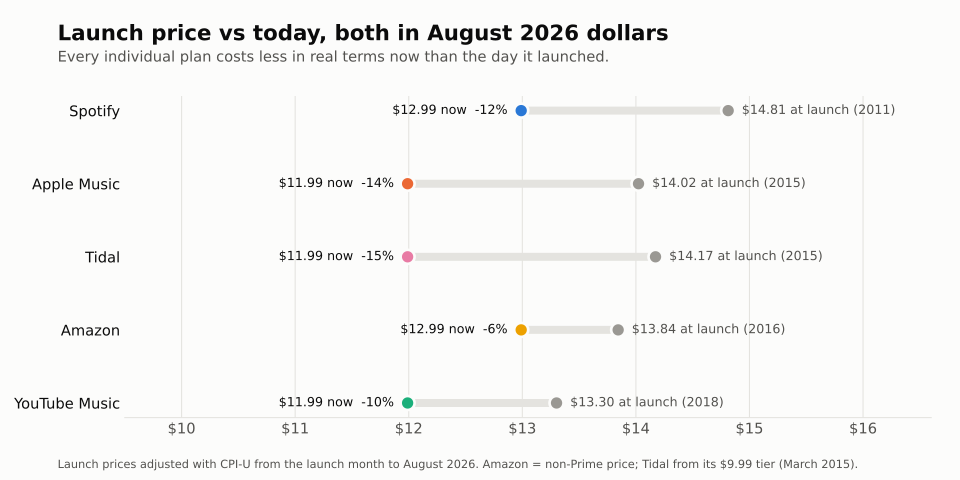
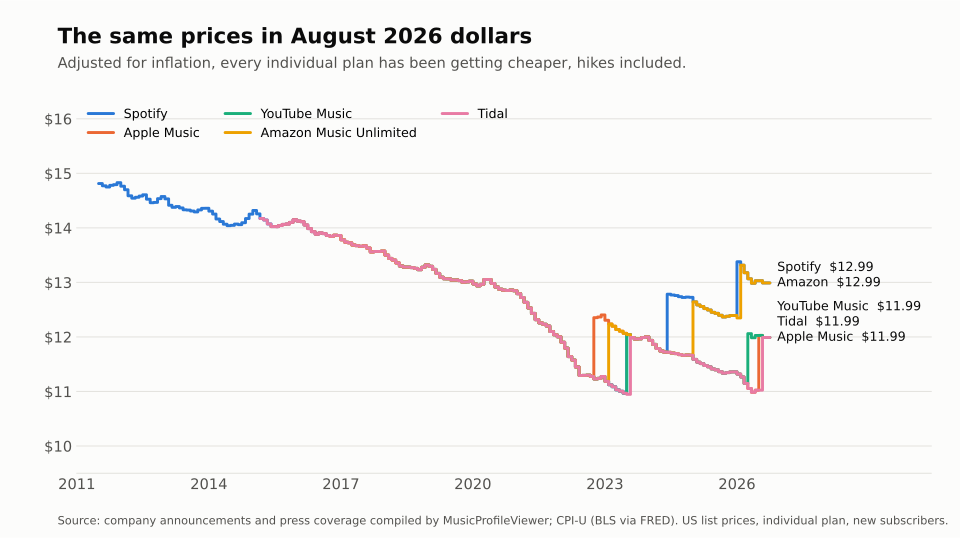
Here's what most price-hike coverage leaves out. Run every launch price through the Consumer Price Index (CPI-U, the standard US measure of inflation) to August 2026, the latest month available, and every individual plan comes out cheaper now than when it started.
| Service | Launched | Launch price | Launch price in Aug 2026 dollars | Price today | Real change |
|---|---|---|---|---|---|
| Spotify | July 2011 | $9.99 | $14.81 | $12.99 | -12.3% |
| Tidal | March 2015 ($9.99 tier) | $9.99 | $14.17 | $11.99 | -15.4% |
| Apple Music | June 2015 | $9.99 | $14.02 | $11.99 | -14.5% |
| Amazon Music Unlimited (no Prime) | October 2016 | $9.99 | $13.84 | $12.99 | -6.2% |
| YouTube Music | May 2018 | $9.99 | $13.30 | $11.99 | -9.9% |
Put another way, Spotify's US price is up 30% since 2011, while consumer prices are up 48.3%. That isn't only our calculation. Warner Music CEO Robert Kyncl made the same point in 2023, telling investors that $9.99 indexed to inflation since 2011 would have been $13.25 at the time. The UK's competition regulator found the same pattern. Its 2022 market study concluded that individual music subscriptions there fell more than 20% in real terms between 2009 and 2021.
Compare that with video. Netflix's Standard plan was $9.99 in 2015 and reached $19.99 in March 2026. That's double, well ahead of inflation. Music streaming has gone up by less than general prices over the same years.
None of that makes a $12.99 bill feel smaller when everything else costs more too. It does make the "price gouging" framing hard to back up for single-person plans.
Who is actually paying more: couples, families and Prime members
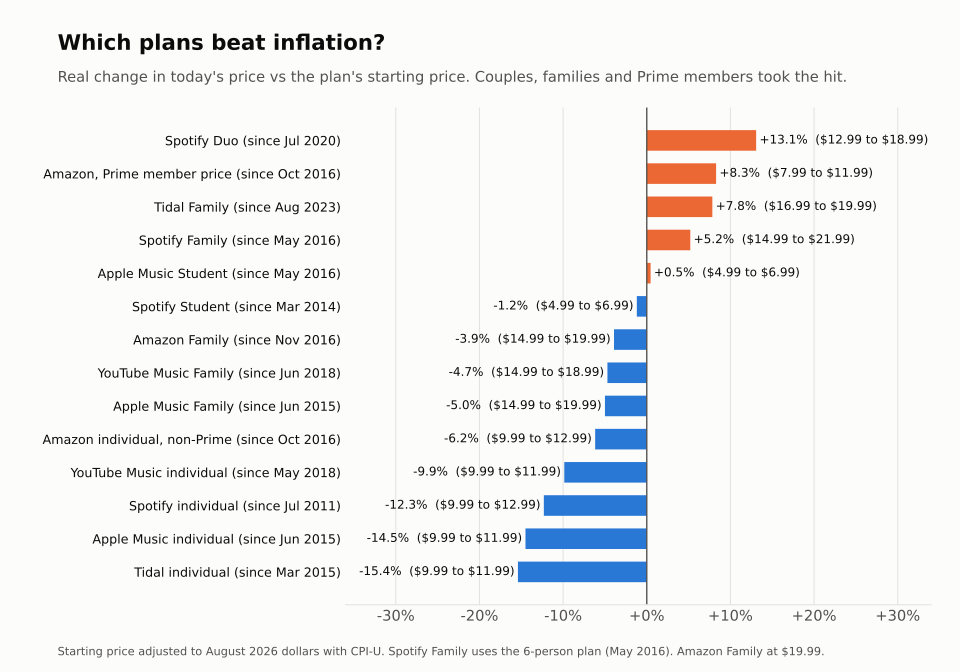
Shared plans are where the increases really landed. Tidal's family plan has also outpaced inflation since it was priced at $16.99 in 2023 (+7.8% in real terms), and Apple's student plan is roughly flat after inflation. The three clearest cases:
- Spotify Duo launched at $12.99 in July 2020 and costs $18.99 now. That's 46% more in six years, or 13.1% more after inflation.
- Spotify Family rose from $14.99 to $21.99 over 10 years, through four increases. That's 46.7% in plain dollars and 5.2% after inflation.
- Amazon's Prime-member price has gone from $7.99 to $11.99. That's 50% in plain dollars and 8.3% after inflation.
Spotify Family is still cheap per person if you fill it: $21.99 split six ways is $3.67 each. Most families don't have six people, though. For a household of three it's $7.33 each, and a couple on Duo pays $9.50 each. The family plans at Apple, YouTube and Amazon still cost less after inflation than when they launched, so if you're on Spotify Family and you're choosing where to save money, start there.
This also explains why the industry's numbers look the way they do. When Goldman Sachs found paid streaming revenue per user had fallen 40% since 2016, it put most of the blame on family plans. The recent increases are partly a way of clawing that money back from the plans that caused the drop.
List, Real, Received: the three prices of a music subscription
Any streaming price can be read three ways. We call it List, Real, Received. Most coverage only ever looks at the first one.
- List is the number on the pricing page: $12.99 for Spotify Premium. Headlines and complaint threads focus on this one.
- Real is the list price after inflation. In July 2011 money, $12.99 is worth $8.76, which is less than the $9.99 Spotify charged at launch.
- Received is what the recorded music business actually brings in per paying account. Family, Duo, Student and promotional plans all pull it down. The RIAA's 2026 mid-year report puts US premium subscription revenue at $3.11 billion across 111.1 million accounts in the first half of 2026. That's about $4.67 per account per month reaching the labels, up 2.1% on a year earlier.
The Received figure explains why labels push for higher prices even though list prices keep rising. On the RIAA's older retail-value basis, which ran until 2024, the music business took in $8.94 per paid US account per month in 2015 and $8.91 in 2024. Our figures divide the RIAA's paid subscription revenue by its average paid accounts, from the 2016 and 2024 year-end reports. Over those nine years Spotify's list price went from $9.99 to $11.99, yet revenue per account didn't grow at all. After inflation, the 2024 figure is 24.7% lower.
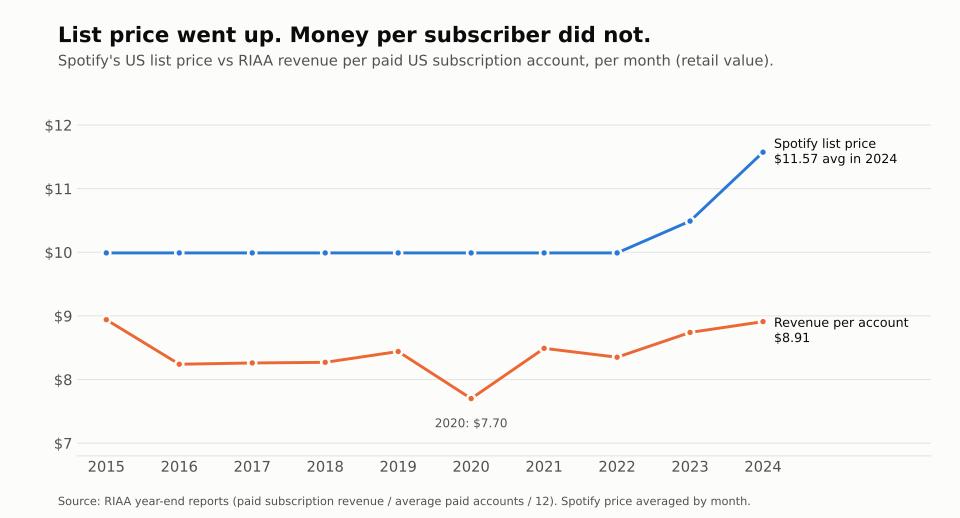
If you only look at List, the increases look greedy. Look at Real and they look like streaming services catching up after a decade of falling prices. Received shows that even with the hikes, the money per subscriber is only now starting to move.
Why the hikes keep coming
The labels want them, and they say so. When Apple raised Apple Music in July 2026, it gave one reason: rising licensing costs. Universal Music Group's licensing program, which it calls "Streaming 2.0", bakes higher prices into its contracts with streaming services. Universal said about 3.5 percentage points of its 6.7% subscription growth in the second quarter of 2026 came from pricing under those agreements. When that growth came in below what analysts expected, Universal's shares fell as much as 23%, to a record low. Warner Music told investors that pricing also contributed about 3.5 points of its growth, and its August 2026 earnings call described a deliberate move from growth driven by subscriber numbers to growth driven by both subscribers and price.
Subscribers mostly stay. After the January 2026 increase, Spotify's CFO said there were "no surprises" in price-related cancellations. In the second quarter, Spotify's average revenue per Premium subscriber rose 7.4% at constant currency, mainly because of the price increases. A 2024 survey points the same way: YouGov found 61% of paying Spotify users would keep their subscription after that year's increase, and only 4% said they would definitely cancel. When so few people leave over each increase, more increases are the rational move.
Analysts expect a regular rhythm now. Goldman Sachs' 2025 Music in the Air report expects price increases every 12 to 24 months. It also found Spotify and Apple Music standard plans were still 39% cheaper than Netflix in the US.
Does any of it reach artists? Some does, but indirectly. Spotify says it paid more than $11 billion to rights holders in 2025, up more than 10% on 2024. That money goes to labels, distributors and publishers first, and how much an artist sees depends on their contract. The extra pricing revenue Universal and Warner reported goes to the labels before it goes anywhere else.
What subscribers are doing about it
We read through the big 2026 reaction threads on the Spotify Community forum, MacRumors, Hacker News and TidBITS. The same few patterns came up again and again.
- People name a breaking point more often than they actually leave. UK posters on the Spotify forum keep naming £14.99 as the line they won't cross. A US family plan subscriber called the $2 increase "a bridge too far" and asked for a retention discount. Far more people say they're about to cancel than say they already have.
- YouTube Premium is where people go when they do leave. On the Hacker News thread about Spotify's January 2026 increase, the most-mentioned alternative was switching to YouTube Premium for ad-free video plus music. In YouGov's 2024 survey, 39% of all Spotify users, free users included, named YouTube Music as a possible alternative, more than any other service.
- Buying music outright gets the most likes. On the MacRumors thread about Apple's July 2026 increase, which ran to about 300 comments, the most-liked post said its author preferred a local music library. Vinyl, CDs, Bandcamp and home servers like Plex and Jellyfin come up in nearly every thread.
- Some subscribers defend the increases. In that same Apple thread, a reply pointing out that artists need to live got more than 40 reactions. One family plan payer on Hacker News said about $22 a month is more than worth it.
- Some people want a cheaper music-only plan. Spotify subscribers keep asking for a music-only tier without audiobooks, podcasts, video or AI features. Spotify's Basic plan is that product, but it's hidden from most people (see below).
If you're thinking about switching, your playlists can be moved, but your listening history mostly can't. Before you cancel, save your Spotify stats, and look at how Apple Music's stats compare with Spotify's so you know what you'd lose.
How to pay less, and what doesn't work
| Tactic | Saves | Catch |
|---|---|---|
| Prepay Spotify with gift cards | Gift cards add months of Premium, not dollars, so the old price is locked in | Individual plan only; you can stack up to 18 months |
| Annual billing (Apple, Amazon, YouTube Music) | Roughly two months free per year | Apple only offers it on the Individual plan, and it's buried in Settings |
| Amazon with Prime | $1 a month off ($11.99 vs $12.99) | Only worth it if you already pay for Prime |
| Student plans | About half price ($5.99 to $6.99) | You have to verify you're enrolled |
| Spotify Basic | $1 a month, with no audiobook hours | Hidden, existing subscribers only, and once you cancel it you can't get it back |
| Bundles and phone carrier perks | Varies | Perk prices go up too |
Spotify gift cards are the best trick available
A Spotify gift card is redeemed as months of Premium, not as a dollar balance. That means a card bought before an increase still covers the same number of months afterwards. This is confirmed in a solved Spotify Community thread. In May 2026 a Spotify Star, one of the forum's volunteer experts, confirmed you can stack up to 18 months, and that cards don't work on Student, Duo or Family plans. In 2025 the 12-month card sold for $99 at Target and Walmart. Check the price before you buy: a card only saves money while it costs less than twelve months of monthly billing, which is $155.88 at $12.99.
Couples should do the sums too. If the card is still $99, two individual cards work out to $16.50 a month between you, against $18.99 for Duo. Duo already gives each person a separate account, so splitting it into two individual plans costs you nothing except the shared Duo Mix playlist.
Annual plans
Apple Music's annual individual plan reportedly costs $119 a year after the July 2026 increase, which is $9.92 a month. Apple doesn't advertise it. According to Apple's support community, the option only shows up in Settings once you already have a monthly subscription. Amazon offers annual billing to Prime members and on the family plan, which is now $219 a year. YouTube Music lists an annual plan at $119.99. Spotify has no annual plan of its own, which is why gift cards are the workaround there.
Spotify Basic, if you can find it
Spotify Basic is Premium without the 15 monthly audiobook hours, at about $1 less. PCWorld explains that it's hidden from new sign-ups and only appears for eligible accounts. On the Spotify forum, people have posted that they lost Family Basic after a failed payment or an account lock and couldn't get it back. If you have it, make sure your card details are up to date.
Bundles and carrier perks
When Apple raised Apple Music in July 2026, it left Apple One Individual at $19.95, but on August 28 that rose to $21.95. It still bundles Apple Music, Apple TV and iCloud+ storage, so if you pay for two of those separately, check whether the bundle works out cheaper. Phone carrier perks help too, but they're not fixed: Verizon raised its Apple Music Family perk from $10 to $13 on September 1, 2026.
What doesn't work
- Threatening to cancel Spotify. When a family plan subscriber asked for one, a forum regular said there's no retention discount that they know of.
- Using a VPN to sign up in a cheaper country. Google has been cancelling YouTube Premium memberships bought this way since June 2024. It also breaks the terms of service.
- Sharing a family plan across households. Since September 2025, YouTube has been pausing family members who don't live at the same address.
- Subscribing through the App Store. Buying YouTube Premium in the iPhone app has cost $20.99 instead of $15.99. Subscribe on the web.
When is the next price increase?
| Service | Launch to first increase | Gaps since | Last increase |
|---|---|---|---|
| Spotify | 144 months | About 10, then about 19 | January 2026 |
| Apple Music | 88 months | 45 | July 2026 |
| YouTube Music | 62 months | 33 | April 2026 |
| Amazon Music Unlimited | 76 months | 23, then 13 | February 2026 |
| Tidal | 101 months | 36 | August 2026 |
No service announces increases ahead of time, so treat this as a forecast based on past patterns, not a schedule. Goldman Sachs expects increases every 12 to 24 months. Spotify and Amazon have been running toward the short end of that range. Going by those gaps, the earliest you'd expect Spotify's next US increase is early 2027, and Amazon's is due soon after that. Apple and Tidal have only just raised prices, so they look unlikely to move again before late 2027.
Two dates to watch: Spotify reports third-quarter results on October 22, 2026, and the September inflation figures come out on October 14. We'll update this page when either one changes the numbers.
Canada: steeper hikes, earlier
FAQ
How much is Spotify Premium in 2026?
In the US, Spotify Premium costs $12.99 a month for Individual, $18.99 for Duo, $21.99 for Family and $6.99 for Student. These prices took effect for new subscribers on January 15, 2026, and existing subscribers moved over on their next billing date, in February or March.
How many times has Spotify raised its prices?
Spotify has raised its US individual price three times: to $10.99 in July 2023, to $11.99 in June 2024 and to $12.99 in January 2026. The family plan has gone up four times since 2016, including a 2021 increase that applied only to Family.
Is Apple Music cheaper than Spotify?
Yes, Apple Music is $1 a month cheaper on the individual plan ($11.99 vs $12.99) and $2 a month cheaper on the family plan ($19.99 vs $21.99). Student plans cost the same, $6.99. Apple doesn't sell a Duo plan.
What is the cheapest music streaming service in 2026?
For one person, Apple Music, YouTube Music and Tidal tie at $11.99 a month, and Amazon Music Unlimited matches that for Prime members. For families, YouTube Music is cheapest at $18.99. For students, YouTube Music and Amazon cost $5.99. If you're willing to pay a year at a time, Apple Music's annual plan works out to $9.92 a month.
Why do music streaming services keep raising prices?
Mostly because the record labels are pushing for it, and because subscribers keep paying. Apple pointed to rising licensing costs, and Universal and Warner both said pricing added about 3.5 points to their 2026 subscription growth. Spotify says the increases haven't caused a surprising number of cancellations.
Will Spotify raise prices again in 2027?
Spotify hasn't announced anything. Its last two increases were 10 and 19 months apart, and Goldman Sachs expects increases every 12 to 24 months. Going by that, the earliest likely time for another US increase is 2027.
Do Spotify gift cards still work after a price increase?
Yes. Spotify gift cards add months of Premium, not a dollar balance, so a card bought before an increase covers the same number of months afterwards. They only work on the Individual plan, and you can stack up to 18 months.
Do price increases go to artists?
Partly, and indirectly. Spotify paid more than $11 billion to rights holders in 2025. That money goes to labels, distributors and publishers, and an artist's share depends on their contract.
Methodology and data
Prices. We built the price history from company announcements, support and pricing pages, and reporting from MacRumors, TechCrunch, Music Business Worldwide, Variety and others. Every row in the downloadable dataset links to its source. Dates are when a price applied to new subscribers. All prices are US list prices per month, before tax. We left out any price we couldn't date from at least one reputable source: the YouTube Music student move from $5.49 to $5.99 and Spotify Basic after 2024. Two family prices rest on a single source: Amazon Family in November 2022 (a blog) and YouTube Music Family in July 2023 (Tom's Guide).
Inflation. We used CPI-U (all items, US city average, not seasonally adjusted, series CUUR0000SA0) from the Federal Reserve Bank of St. Louis copy of the Bureau of Labor Statistics data. August 2026 is the base month. Real prices are the list price × (CPI in August 2026 ÷ CPI in the month the price applied). The BLS never published October 2025 because of the 2025 funding lapse, so the calculator fills that month with the average of September and November.
Revenue per account. We divided RIAA paid subscription revenue by the RIAA's average paid subscription accounts for each year, then by 12. The 2015 to 2024 figures use the RIAA's retail-value basis, with restated figures where the RIAA revised them. The RIAA switched to wholesale reporting from 2025, so the $4.67 figure for 2026 can't be compared directly with the older series. A family plan counts as one account. The 2015 figure predates the RIAA's 2016 split of limited-tier services into their own category, so it may include a small amount of revenue from those cheaper tiers.
Calculator. The calculator adds up each month's new-subscriber price from your start month through October 2026. Because existing subscribers usually move to a new price a month or two later, the totals run slightly high. It doesn't include taxes, free trials or promotions.
Download the data: us-music-streaming-prices-2011-2026.csv (service, plan, price, effective date, source URL). You're free to use it, with a link back to this page.
What to revisit: Spotify's Q3 2026 results (October 22), the September CPI release (October 14), the date Apple Music's July 2026 price reached existing subscribers, and whether Spotify Basic survived the 2026 increase.